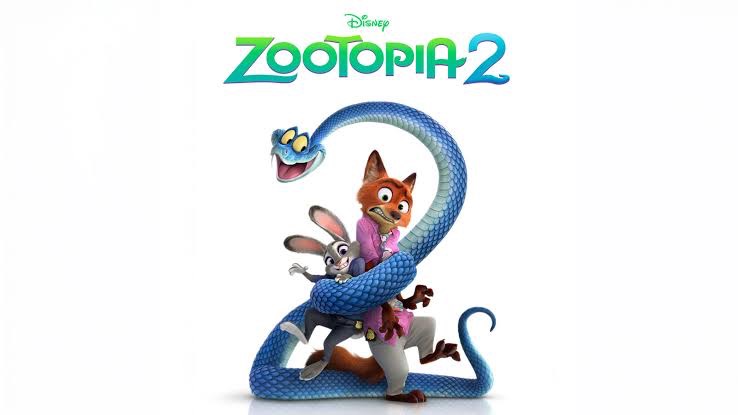
Why Zootopia 2 is an Emotional Mirror for Adults, Its Biggest Audience
When 20-year-old Bakdaulet Gainullayev went to see Zootopia 2 with his girlfriend at Novo Cinemas at Mall of Qatar in December 2025, he expected a nostalgic sequel, something familiar, entertaining, and light. The film, after all, is an animated children’s movie about Judy Hopps, a rabbit police officer, and Nick Wilde, a fox navigating life in a bustling animal city. Instead, he found himself crying in the movie theater.
“The moment Nick admitted how afraid he was of losing Judy, it hit me really hard,” Gainullayev said. “It felt exactly like real relationships. Like things my girlfriend and I have talked about.”
Much of the film’s emotional impact has centered on a single moment that quickly became one of its most discussed scenes online. Nick Wilde opens up to Judy Hopps with unexpected vulnerability, admitting that what frightens him is not their differences, but the possibility of losing her.
In the weeks following its release, Zootopia 2 sparked a wave of emotional responses from adult viewers, especially online. Scenes from the film circulated widely on TikTok and Instagram, where clips and quotes drew millions of likes on each platform as audiences shared personal reactions and relationship reflections. Though marketed as family entertainment, the sequel was widely received by many adults as something closer to an intimate story.
One TikTok clipLinks to an external site. of Nick’s confession alone received more than 1 million likes, with thousands of viewers reacting in the comments.
“And they say this is a kids movie,” one user wrote. Another added: “I expected a kiss… but I came across one of the most loving, sincere… confessions of honest love that I’ve ever seen in the cinema.”
Another comment, “Better than a kiss scene,” drew 83,900 likes.
That emotional resonance has matched the film’s extraordinary commercial success. Zootopia 2 has earned more than $1.7 billion globally, making it the highest-grossing animated film in Hollywood history, according to the BBCLinks to an external site., and a cultural phenomenon far beyond its intended audience.
Three viewers, three emotional realities
Watching the film alongside his partner only intensified the emotional impact, Gainullayev said. “I could see myself in Nick,” he explained, “how he tries to protect her even when she doesn’t ask for it.”
“It reminded me how important it is to say what you feel while you still can,” he added.
He described the final scenes as overwhelming, saying he cried not because the film was sad, but because it reflected his own fears and attachments. “It reminded me how important it is to say what you feel while you still can,” he said.
Other adult viewers also connected to the scene in their own ways, shaped by their different relationship experiences.
Sabina Tolegen, 25, who is currently single, said the film also struck her emotionally.
“It made me think about my previous relationships,” she said. “I didn’t expect to cry, but I did. That moment stayed with me.”
For Sabina, the confession scene stood out because of how openly Nick expressed his emotions. “You don’t often see male characters in animated films talk so honestly about fear and attachment,” she added. “That felt very real .”
Afterward, Saida said she began noticing similar responses online, where adults shared the confession scene across TikTok.
“When I saw those videos later, it made sense,” she said. “I think it resonates more with people who have actually been in relationships. They connect to it differently.”
Why experience shapes emotional response
According to Dr. Jocelyn J. Bélanger, a professor of social psychology at Carnegie Mellon University in Qatar, the film’s strong emotional pull on adult viewers is not surprising. Bélanger, who saw Zootopia 2 with his four-year-old son in January 2026, said people tend to connect most strongly to stories that mirror their own emotional experiences.
“Viewers don’t respond to films in a vacuum,” Bélanger said. “They bring their relationship history with them .”
For viewers currently in relationships, Bélanger explained, emotionally vulnerable scenes can trigger what psychologists call emotional projection, in which people see their own fears, attachments, and hopes reflected on screen. “That’s why those viewers often describe intense emotional reactions,” he said.
He added that the film’s popularity also reflects a broader cultural shift in what adult audiences value in romance.
“Adults today seek relationships grounded in mutual respect, growth, and communication,” Bélanger said. “Zootopia 2 mirrors that through its focus on emotional safety and trust-building rather than idealized romance.”
Fiction as a safe emotional space
What unites these responses is not nostalgia or spectacle, but the film’s emphasis on emotional intimacy. Unlike traditional Disney romances, Zootopia 2 avoids kisses, dramatic declarations or clear romantic labels. Instead, it centers conversations, fear of loss, trust, mutual dependence.
Industry data reported by Deadline,Links to an external site. an entertainment trade publication covering box office and film audiences, shows that more than half of Zootopia 2’s viewers were aged 18 to 34, with women over 25 giving it the highest audience ratings. The film’s adult appeal was further reflected during awards season, when Zootopia 2 led Disney’s slate of 27 Golden Globe nominations, according to AllEars,Links to an external site. a Disney-focused entertainment news site.
Bélanger said this reflects a broader cultural shift. “Adults today tend to value emotional safety and vulnerability more than traditional romantic gestures,” he said. “They’re responding to relationships that feel psychologically healthy.”
Bélanger noted that watching emotionally grounded narratives together can help partners process feelings they struggle to express directly.
“Fiction creates distance,” he said. “It allows people to talk about emotions without immediately making them personal.”
For Gainullayev, that distance made the experience powerful rather than uncomfortable.
“It felt safe,” he said. “But it also felt real.”
Post a comment